Understanding May 4th and 5th: Remembrance and Liberation day in the Netherlands
One day, the country is deeply solemn with flags flying at half-mast. The next day, there are free music festivals, military parades, and people celebrating in the streets.
These two days, May 4th and May 5th, are deeply intertwined. Together, they form the cornerstone of how the Netherlands reflects on the devastating cost of war and celebrates the value of freedom.
If you're new here, it’s important to understand the history behind these days so you don't accidentally commit a major cultural faux pas. Here’s everything you need to know about Dodenherdenking (Remembrance Day) and Bevrijdingsdag (Liberation Day).
The Historical Reality: Persecution and the Resistance
To truly understand the gravity of May 4th, you have to look at the historical reality of the German occupation from 1940 to 1945. The Netherlands suffered catastrophic losses, particularly within its Jewish community.
Before the war, the Netherlands was home to roughly 140,000 Jewish people. By the time the country was liberated, over 100,000 had been murdered in concentration and extermination camps. That equates to about 75% of the Dutch Jewish population, the highest death rate in all of Western Europe. The sheer scale of this systematic persecution wiped out entire neighborhoods, families, and centuries of Jewish cultural life, particularly in Amsterdam.
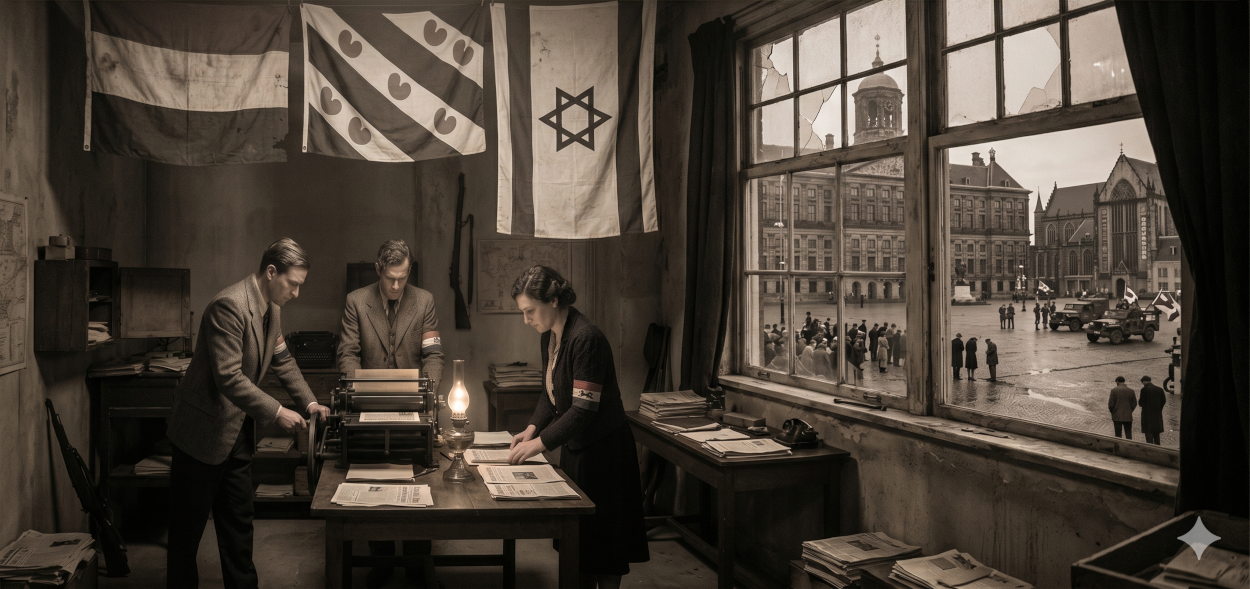
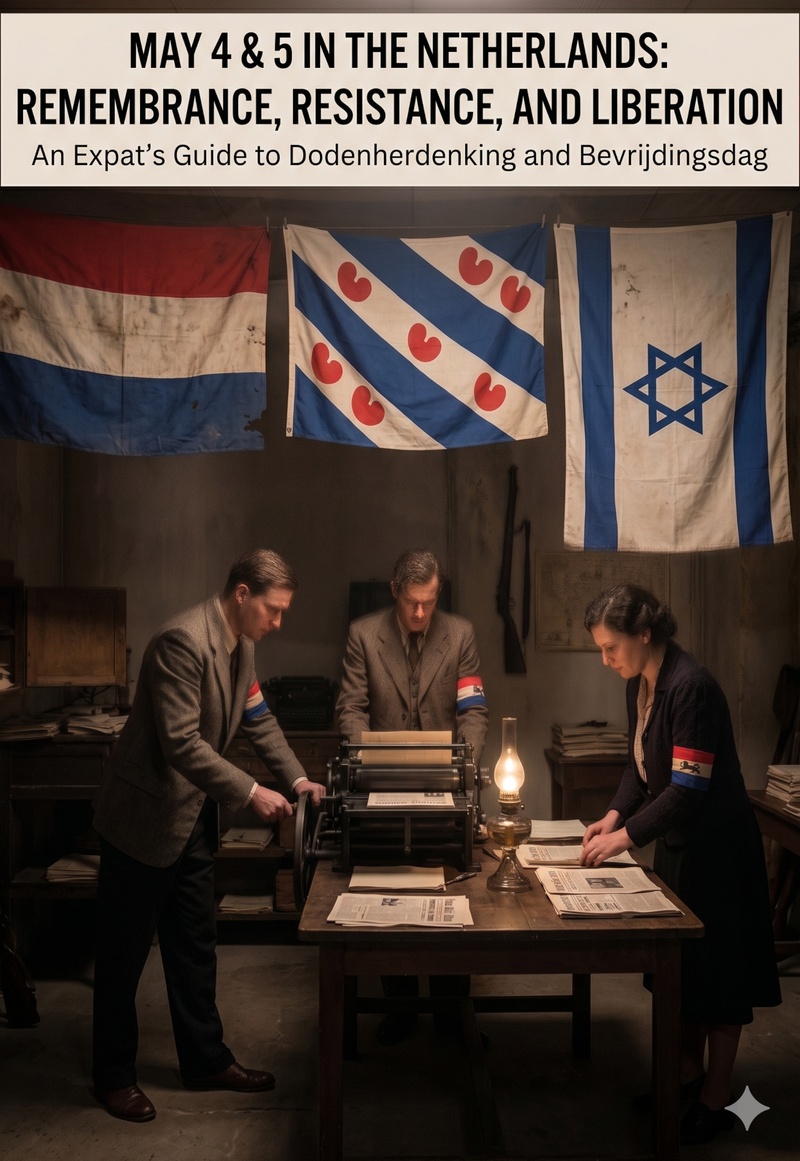
But the history of the occupation is also a history of defiance. While some looked away or collaborated, the Dutch resistance actively fought back. Underground networks hid tens of thousands of onderduikers (people in hiding, like Anne Frank and her family), forged vital ration cards and identity papers, and ran secret printing presses to distribute illegal newspapers.
One of the most defining and unique moments of Dutch resistance was the Februaristaking (February Strike) of 1941. Sparked by the first violent round-ups of Jewish men in Amsterdam, over 300,000 tram drivers, dock workers, civil servants, and shopkeepers went on a general strike to openly protest the persecution of their Jewish neighbors. Though the Nazis violently crushed it after two days, it remains the only large-scale, civilian strike against the treatment of Jews in all of occupied Europe.
May 4th: Dodenherdenking (Remembrance Day)
May 4th is a day of national mourning. Originally established to honor those who died during World War II, the scope has since expanded. Today, the country remembers all Dutch victims of WWII, as well as those who have died in war situations and peacekeeping missions ever since.
Throughout the day, you will see flags hanging at half-mast on government buildings and private homes. But the most important part of the day happens in the evening.
The Two Minutes of Silence
At exactly 20:00 (8:00 PM), the entire country goes completely silent for two minutes. And when the Dutch say silent, they mean silent.
- Public transport stops: Trains literally come to a halt on the tracks. Buses pull over to the side of the road.
- Traffic pauses: If you are driving on the highway, it is customary (though not legally required) to park your car safely on the hard shoulder right before 8:00 PM.
- Supermarkets and stores: If you are buying groceries, the cashiers will stop scanning, and everyone in the store will stand still.
- Broadcasting pauses: TV and radio stations stop their regular programming, often just showing a live feed of the national wreath-laying ceremony at the Dam Square monument in Amsterdam.
What should you do?
If you are outside, stop walking or cycling, get off your bike, and stand quietly. Do not be the person talking loudly on your phone or blasting music from your balcony at 7:59 PM. It is a deeply respected tradition, and interrupting the silence is considered highly offensive. After the two minutes are up, the national anthem (Het Wilhelmus) is played.
May 5th: Bevrijdingsdag (Liberation Day)
Once the clock strikes midnight, the mood flips. May 5th is Bevrijdingsdag, the day the Netherlands celebrates its liberation in 1945. The flags are hoisted to full-mast (often with a special festive orange pennant attached), and the country gets ready to party.
The idea is simple: on the 4th we reflect on the cost of freedom, and on the 5th we celebrate the fact that we have it.
Every province in the Netherlands hosts a massive, free Bevrijdingsfestival (Liberation Festival). Cities like Amsterdam, Haarlem, The Hague, and Wageningen (where the German capitulation in the Netherlands was negotiated) turn into open-air festivals with live music, food stalls, and public speakers. The government even appoints "Ambassadors of Freedom", famous Dutch artists who are flown around the country by military helicopters to perform at multiple festivals in a single day.
The Big Expat Question: Is May 5th actually a public holiday?
Here is where it gets confusing for a lot of internationals. Yes, May 5th is an official national holiday. No, that does not mean you automatically get the day off.
Unlike King's Day, where almost everyone gets a paid day off, Liberation Day operates under a very specific set of Dutch rules:
- The 5-Year Rule (Lustrum Years): Traditionally, May 5th is only a mandatory paid day off once every five years, in years ending in a 0 or a 5 (for example, 2025, 2030, 2035).
- Check your CAO: Whether you get the day off in "normal" years depends entirely on your contract and your industry's Collective Labor Agreement (CAO). Civil servants, teachers, and bank employees usually get it off every year. Many corporate and private sector employees do not.
If you aren't sure, the best thing to do is just ask your HR department or check your company's internal calendar.
Experiencing it yourself
Living in the Netherlands is about more than just biking in the rain and dealing with the Belastingdienst. Understanding the history of the occupation, participating in the two minutes of silence, and then heading out to a Liberation Festival the next day is one of the fastest ways to feel connected to the local culture. It’s a powerful, grounding experience, and highly recommended for any expat making the Netherlands their home.