Those Blue Envelopes... Not Again! A Guide to Dutch Local Taxes in 2026
But early in the year, you might find some other official-looking letters landing on your doormat. These aren't from the national tax man, but from your local municipality and water board.
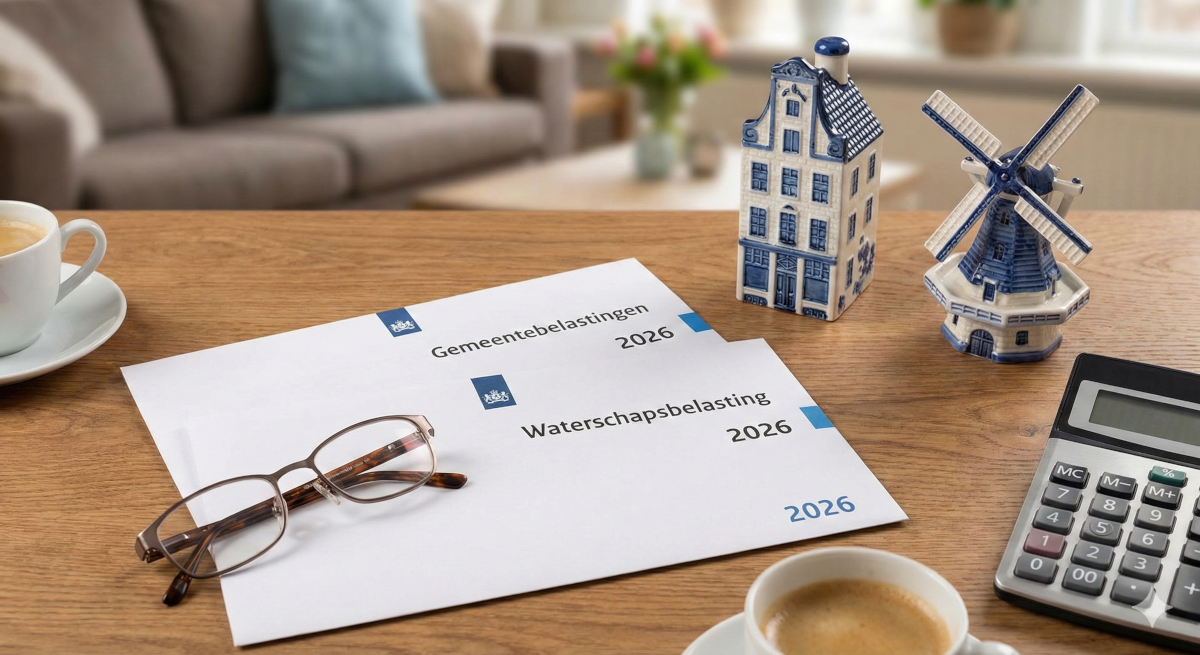
Yes, my fellow expats, it's time to talk about gemeentebelastingen (municipal taxes) and waterschapsbelasting (water authority tax). They are an unavoidable part of life in the Netherlands, and understanding them can save you a lot of confusion. So, grab a coffee, and let's break down what you need to know for 2026, based on official sources.
1. Gemeentebelastingen: Your Contribution to the City
Your local municipality (gemeente) provides a ton of services that make your city or town a nice place to live. Think about street cleaning, maintaining public parks, lighting, and of course, collecting your trash. To pay for all of this, they charge local taxes.
You'll usually get a single bill, often called a gecombineerde aanslag (combined assessment), sometime between January and March. The exact amount depends on where you live and the value of your property, but here are the main components:
- Afvalstoffenheffing (Waste Collection Tax): This is for the collection and processing of household waste. Pretty much every household pays this, whether you rent or own. In 2026, many municipalities are moving to a single rate for all households, regardless of size, to simplify things. You might also have a variable part based on how often you put out your grey bin (the "diftar" system).
- Rioolheffing (Sewage Tax): This tax covers the cost of connecting your home to the sewage system and managing wastewater and rainwater. Like the waste tax, this is typically paid by the user of a property (that's you, even if you're renting!).
- Onroerendezaakbelasting or OZB (Property Tax): This one is only for homeowners. It's based on the WOZ-waarde (official assessed value) of your property on January 1st of that year. If you're renting, you can happily ignore this part of the bill!
Heads up for 2026: Keep an eye on your bill. Municipal taxes are generally expected to rise slightly, partly due to inflation and increasing costs for things like waste processing.
2. Waterschapsbelasting: Keeping Your Feet Dry
This is the one that often confuses newcomers. "Why am I paying another water tax?" you might ask. Well, this isn't for the tap water you drink (that's a separate bill from your water company).
Waterschapsbelasting goes to your regional Water Authority (waterschap). These folks have a very important job in a country that's largely below sea level: keeping us safe from flooding and ensuring our water is clean.
Everyone who lives in the Netherlands pays water authority tax. The bill usually arrives around the same time as your municipal taxes and typically consists of two parts:
- Watersysteemheffing (Water System Levy): This pays for maintaining dikes, levees, canals, and managing water levels to prevent flooding. There's a part for residents (a fixed amount per household) and a part for property owners (based on the WOZ value).
- Zuiveringsheffing (Purification Levy): This is for cleaning the wastewater that goes down your drains and toilets before it's returned to nature. It's calculated based on "pollution units" (vervuilingseenheden). A single-person household pays for one unit, and a household with two or more people typically pays for three units.
What to expect in 2026: Be prepared for a higher bill. Official sources and news outlets have indicated a significant increase in water authority taxes for 2026. This is due to rising costs for things like dike reinforcements, dealing with the effects of climate change (more intense rainfall and droughts), and stricter environmental regulations for water purification.
Practical Tips for Peace of Mind
- Don't Panic: It's a standard part of living here. You're contributing to the excellent infrastructure we all enjoy.
- Check the Details: Always open the letter or log in to your municipality's digital portal (often via DigiD). Check if the number of people in your household is correct and if you're being taxed as a tenant or owner appropriately.
- Payment Options: You don't have to pay the whole lump sum at once. Most municipalities and water boards offer the option to pay in monthly installments via direct debit (automatische incasso). This can be a lot friendlier on your monthly budget.
- Moving House? If you move during the year, some taxes, like the OZB, are for the whole year based on your situation on January 1st. Others, like the waste and sewage tax, are usually adjusted pro-rata, and you'll get a refund for the months you didn't live there. Don't forget to deregister from your old municipality and register in your new one on time!
- Can't Pay? If you have a low income and few assets, you might be eligible for a tax waiver (kwijtschelding). Check your municipality's or water board's website for the conditions and how to apply.
So, when those letters arrive, take a deep breath, make yourself a nice cup of tea, and tackle them one by one. It's just another little adventure in your Dutch life!
Disclaimer: Tax rules and rates vary by municipality and water authority and are subject to change. This article is for informational purposes only and based on publicly available data for 2026. Always refer to your specific tax assessment and the official website of your municipality or water board for the most accurate and up-to-date information.
[1]: Individuals | Tax Administration - Belastingdienst
[2]: 2026 Tax Plan: steps towards a better tax system | News item - Government.nl
[3]: 2026 Tax Plan - PwC