Code Orange, Snow, and You: A Dutch Weather Survival Guide
The Netherlands is famous for its rain, but when real winter weather hits, like the snow and ice we are seeing this week, the country can grind to a halt surprisingly fast. For expats, the Dutch system of weather warnings and transport updates can feel a bit cryptic.
Here is your guide to understanding the color codes, navigating the chaos, and finding practical information when the trains stop running.
1. Decoding the "Code" System
You will hear everyone from your neighbor to the news anchor talking about "Code Yellow" or "Code Orange." These aren't just random alerts; they are official warnings issued by the KNMI (Royal Netherlands Meteorological Institute).
Here is what they actually mean for your day:
- Code Green: No warnings. The typical Dutch weather (probably raining, but safe).
- Code Yellow (Weerswaarschuwing): Be alert. This is common. It usually means there is a chance of hazardous weather like heavy gusts, dense fog, or—as we are seeing today—slippery patches (gladheid). You can still travel, but pay extra attention.
- Code Orange (Weerswaarschuwing Extreem Weer): Be prepared. This is serious. There is a high chance of extreme weather that can cause damage or injury. The advice is often to work from home if possible and only drive if strictly necessary.
- Code Red (Weeralarm): Take action. This is rare. It means the weather is having a major impact on society. In this scenario, you should generally stay indoors unless you have an emergency.
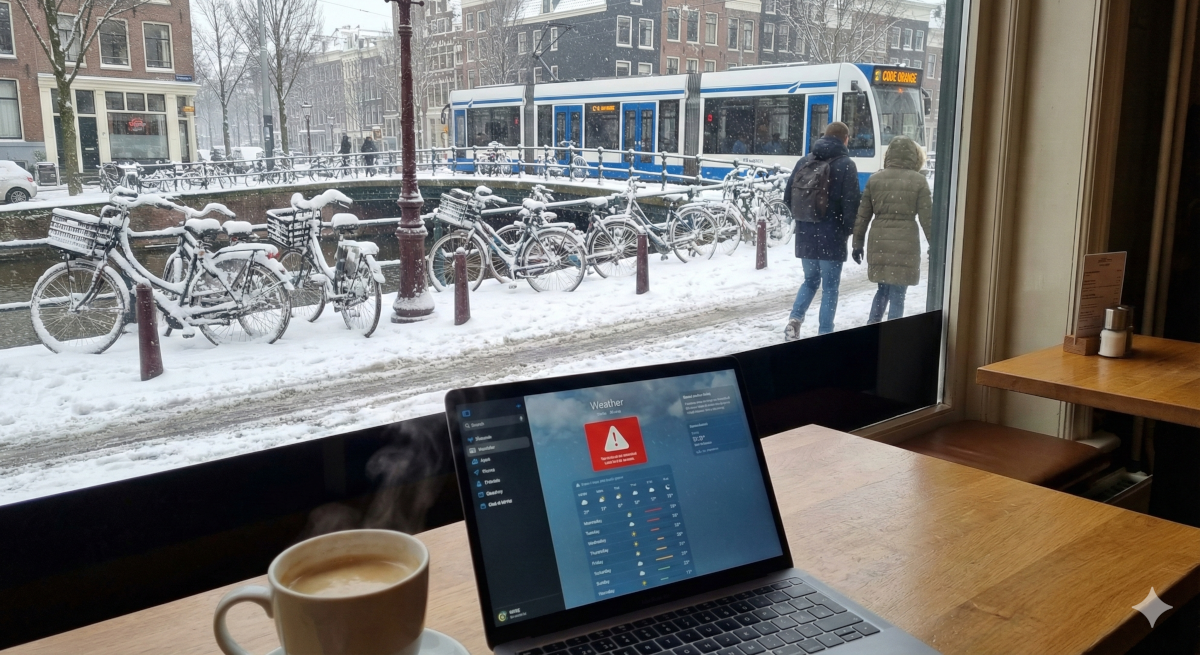
Right now (Jan 5): We are seeing a mix of Code Orange and Code Yellow across different provinces due to snow and ice. Expect more traffic, if you can work from home it is probably a good moment for it.
2. Public Transport: The "Winter Timetable"
When the temperature drops, the NS (Dutch Railways) often switches to a "Winter Timetable" (winterdienstregeling) or an "adjusted timetable" (aangepaste dienstregeling).
Why? It’s a preventive measure. By running fewer trains, they create more "space" on the tracks to deal with frozen switches or broken-down trains without causing a nationwide gridlock.
Where to check before you leave:
- The NS App: This is your bible for trains. Enable push notifications for your specific route.
- 9292: Use this for door-to-door planning that includes buses, trams, and metros. It is often faster at updating bus delays than Google Maps.
- The Golden Rule: During snow, check your journey 15 minutes before you leave the house. The situation changes fast.
3. Driving: The "Slippery" Reality
If you drive, you need to know the acronym ANWB. They are the Royal Dutch Touring Club, and they monitor road safety.
Today alone, we saw over 680km of traffic jams during the morning rush. The combination of snow and rush hour is notoriously difficult here.
- Check Rijkswaterstaat: They manage the highways and offer a live map of gritters (salt trucks) and traffic jams.
- Listen to the Radio: If you are in the car, turn on NPO Radio 1 or Radio 538 for constant traffic updates. It is also great to learn the Dutch language.
- Winter Tires: Unlike Germany, winter tires are not mandatory in the Netherlands, but they are highly recommended. Many Dutch drivers stick to summer or all-season tires, which contributes to the chaos when snow actually sticks.
4. Your Official Toolkit
Don't rely on rumors or screenshots in WhatsApp groups. Bookmark these official sources:
- Weather Warnings: KNMI.nl (They have an English version).
- Train Updates: NS.nl
- Traffic & Roads: Rijkswaterstaat Verkeersinformatie
- General Transport: 9292.nl
Stay warm, drive safe, and if you can maybe just enjoy the view from your home office today.